
How to Read AI Benchmarks and Test Your Own Tasks
Model A scores 90% and B scores 85%, but that test may have little in common with your Thai-language work. Before choosing by rank, check what was measured and under which conditions, then try tasks whose answers you can verify.

Use benchmarks to shortlist models, then test actual tasks
A 90% leaderboard score does not mean the model will get nine out of ten of your tasks right. Benchmark scores come from a particular set of questions and scoring rules. Before comparing 90% with 85%, check whether the tasks and evaluation methods match and resemble your work.
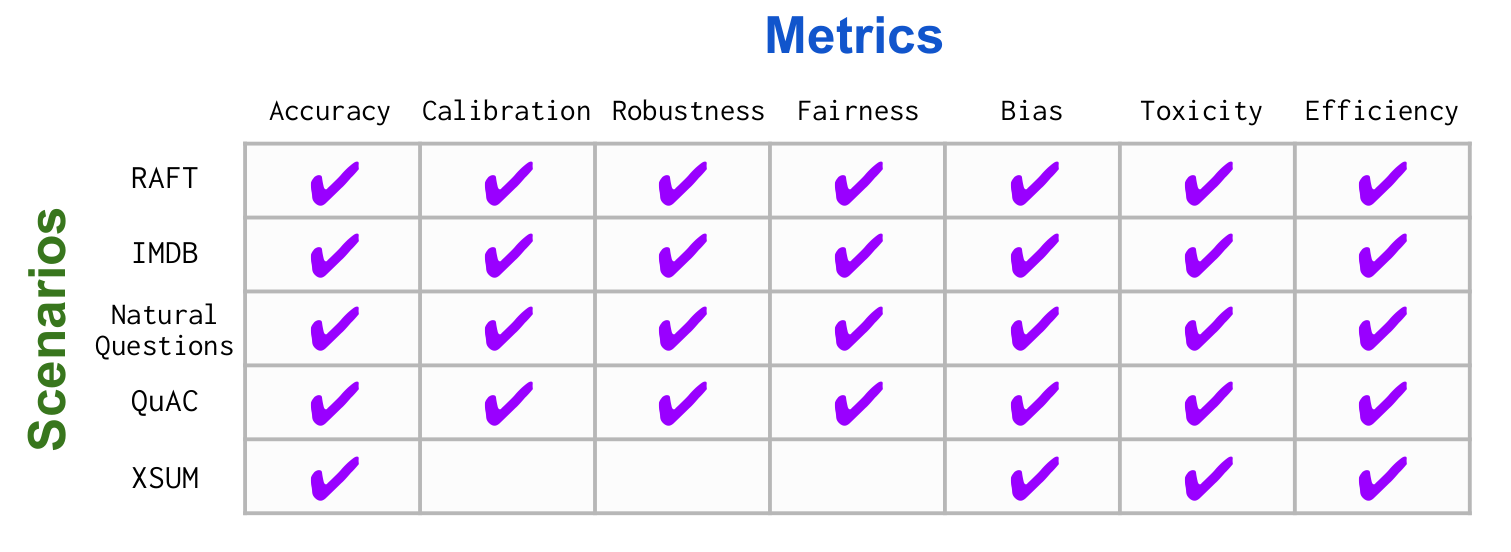
Stanford's HELM calls for evaluation across scenarios and metrics, including disclosure of what was not measured. Accuracy alone misses robustness, fairness, safety and efficiency. Public scores help narrow candidates; your own tasks show whether a model fits the work.
Read the test-set name before the score
Before looking at rankings, examine the tasks. Multiple-choice questions and coding problems test different skills. Neither example alone shows whether a model can summarize a Thai report without losing figures. An English-language score is a starting point for testing, not a verdict.
| What the test suite emphasizes | Example | Questions that still need to be examined by yourself |
|---|---|---|
| Knowledge and reasoning through questions | MMLU and similar test sets | Can it explain actual work, or merely select the right answer? |
| Writes code and passes test cases | LiveCodeBench | How well does it read existing code, fix bugs, and work with our project? |
| Evaluate multiple aspects and contexts. | HELM | Are there Thai language jobs, risks, and costs that we are interested in including? |
The table describes scope, not which test is best. Tasks, datasets and scoring rules can change by version. Read the evaluation methods from Hugging Face Leaderboards or LiveCodeBench before interpreting scores
Why the same benchmark name does not ensure comparability
Even under the same benchmark name, one evaluation may provide examples (zero-shot versus few-shot), ask for a selected or generated answer, use different sampling settings or apply different grading rules. A score gap may reflect the method as well as model capability.
In Hugging Face's MMLU analysis, published on 23 June 2023, the authors compared several implementations on the same dataset and found that scores and model rankings can change. The article illustrates how evaluation methods matter; it is not a current leaderboard.
Compare model versions, benchmark versions, examples in the prompt, answer-generation methods, scoring rules and test dates side by side. If important details are missing, do not attribute a score gap solely to the models.
Watch out for high scores on exams that the model may have seen.
Data contamination occurs when test questions or similar material enter training or model-tuning data. A score may then reflect familiarity rather than novel problem-solving. A high score does not prove contamination, but you should check how training and test sets were separated.
Project LiveCodeBench uses programming problems released over time and lets evaluators select date ranges to reduce contamination risk. Newer problems and this design still do not guarantee that contamination is eliminated.
Hypothetical example: A higher rated model may not be suitable for the task at hand.
Suppose a team needs to turn Thai customer emails into follow-up tasks and is choosing between models A and B. The following scores and costs are entirely hypothetical, not real model test results. They illustrate how a general score and a task-specific test can point in different directions.
| Criteria | Model A (hypothetical) | Model B (hypothetical) |
|---|---|---|
| General-knowledge benchmark scores | 90% | 85% |
| Meets all Thai email summarization criteria across 20 examples | 15/20 = 75% | 18/20 = 90% |
| Average response time per task under the same test conditions | 12 seconds | 7 seconds |
| Hypothetical cost per 100 tasks | 60 Baht | 40 Baht |
In this hypothetical table, B passes more email-summary tasks and responds faster despite its lower general-knowledge score. It is worth further testing, but 20 examples cannot cover every case. Add ambiguous messages and classify errors: a missed deadline or owner may matter more than awkward wording.
In the example, pass rate is Number of jobs that pass the criteria ÷ Total number of jobs × 100: 15 ÷ 20 × 100 = 75% and 18 ÷ 20 × 100 = 90%. Compare costs under similar message lengths, tool use and retry counts; otherwise the prices describe different workloads.
Try evaluating your own work without having to be a researcher.
The following steps are KrobClick's Practical Proposal drawing on multidimensional evaluation in a real use context from the NIST AI Risk Management Framework but NIST does not prescribe these steps as a universal testing standard.
- Define a single job clearly: For example, summarize customer messages into topic, issue, owner, and deadline without adding information absent from the source
- Make a sample set with reference answers: Start with ordinary and difficult cases: ambiguity, varied dates, mixed Thai/English, and insufficient information. Use hypothetical or authorized, deidentified data.
- Set passing criteria before testing: Require complete key information, no invented names or amounts, and explicit acknowledgment when the source does not answer. Do not change criteria mid-test to favor a model.
- Use the same conditions: Commands, data sets, number of reps, and time constraints must be comparable. If any model requires specific settings, note the differences.
- Record more than an overall score: Note down major errors, response times, estimated costs, consistency, and ease of human editing.
- Review before actual use: Require human review for consequential work and retest when model versions, instructions, or data change
For Thai-language work, test abbreviations, Buddhist Era years, varied date formats and names from the task. English-only scores do not establish Thai accuracy. Before sending personal or company data for testing, check the provider's policy and whether you have permission to use the data.
What benchmarks do not tell you, and questions to ask before choosing
- Long, multistep tasks: A single answer score does not guarantee that the AI will perform multiple steps without getting lost on the topic.
- Quality of open-ended answers: Written work, analysis, or summary must have quality criteria and inspection by appropriate people.
- Actual cost and speed: may depend on input length, tool calls, system load, and service conditions at the time
- Security and Privacy: High knowledge scores do not establish that data management, permissions, or risks from incorrect answers meet organizational criteria
- Changes over time: Models, test sets, and scoring methods may change. Therefore, you must check the date and version. Do not rely on old rankings as current conclusions.
The NIST AI RMF emphasizes evaluation in context and monitoring risk before and during use. “Does it suit our task?” matters as much as “Who ranks first?”
Choose using two layers of evidence: public scores and your real tasks
Use public scores to shortlist candidates, read the methodology, then run comparable trials on your own tasks. Record errors, response time, cost and what data goes to the provider. If evidence is thin, expand the test rather than rely on one ranking.
Sources
- Stanford CRFM: Language Models are Changing AI — The Need for Holistic Evaluation (2022)
- Hugging Face: What’s going on with the Open LLM Leaderboard? (2023)
- Hugging Face: Leaderboards and Evaluations documentation
- LiveCodeBench: Official repository and evaluation methodology
- NIST AI Risk Management Framework: Measure function
Sources reviewed October 12, 2026 (Thailand time). This explains documentation, not KrobClick model test results. A/B figures are hypothetical and do not compare actual models.